
Apple Leadership Transition 2026: Why the “Apple Is Doomed” Story Misses the Point
Apple’s December 2025 leadership changes look dramatic. Apple’s own updates show a managed handoff across AI, legal, and operations.
Tech headlines want one clean story: Apple leaders are leaving, so Apple must be breaking.
Apple’s own announcements point to a different story.
This looks like a controlled leadership transition across legal, policy, environment, AI, and design. Not a corporate emergency.
Key takeaways
Apple announced named successors and specific transition dates. That signals planning.
Apple moved AI under its software leadership line. That signals urgency on delivery.
CEO transitions trigger senior turnover. The “first year” is the highest-risk window.
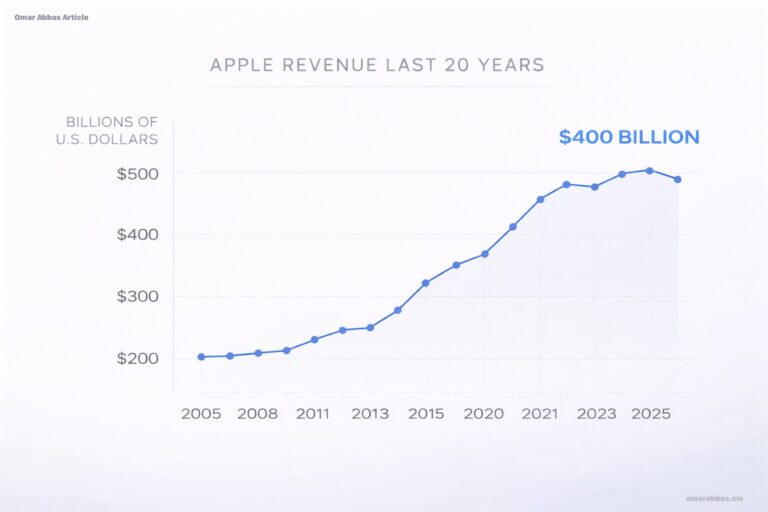
What Apple actually announced in December 2025
This is what matters for analysis: dates, reporting lines, and named replacements.
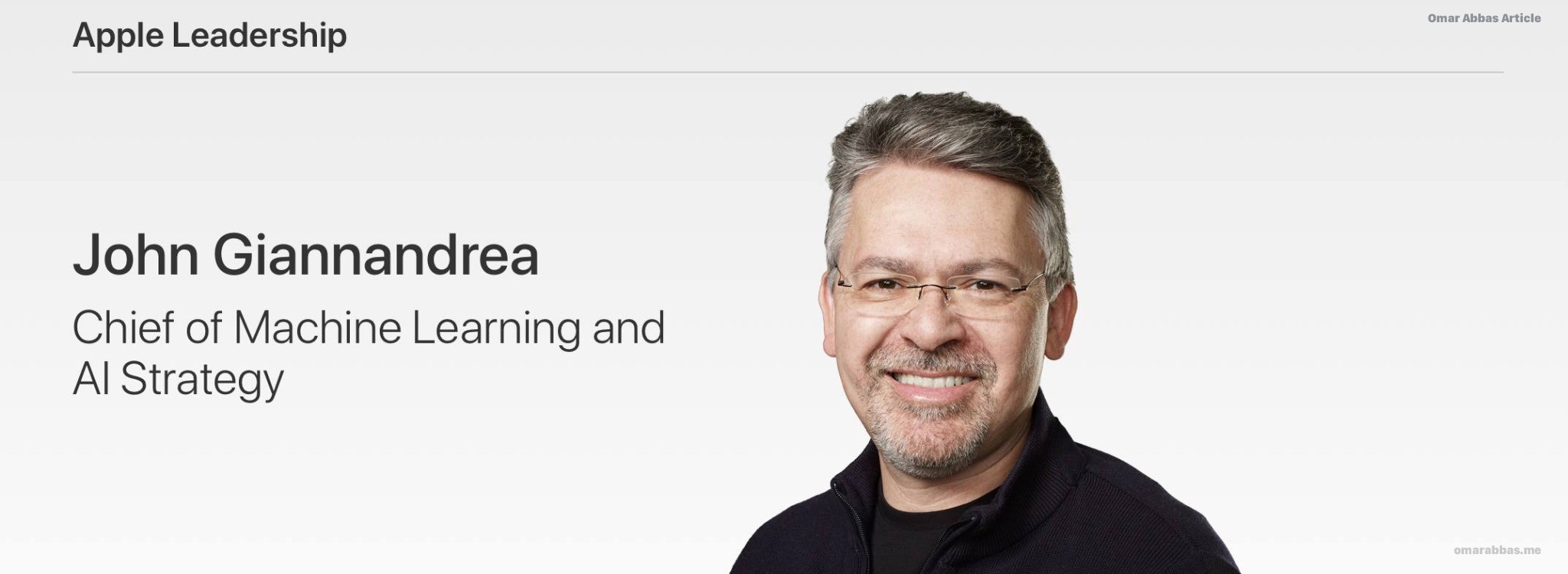
December 1, 2025: AI leadership change
Apple said John Giannandrea will step down and retire in spring 2026.
Amar Subramanya will become VP of AI and report to Craig Federighi.
Why it matters
AI sits closer to product execution when it reports into the software org. That usually means leadership wants faster shipping and fewer handoffs.
December 3, 2025: Design leadership change (Apple to Meta)
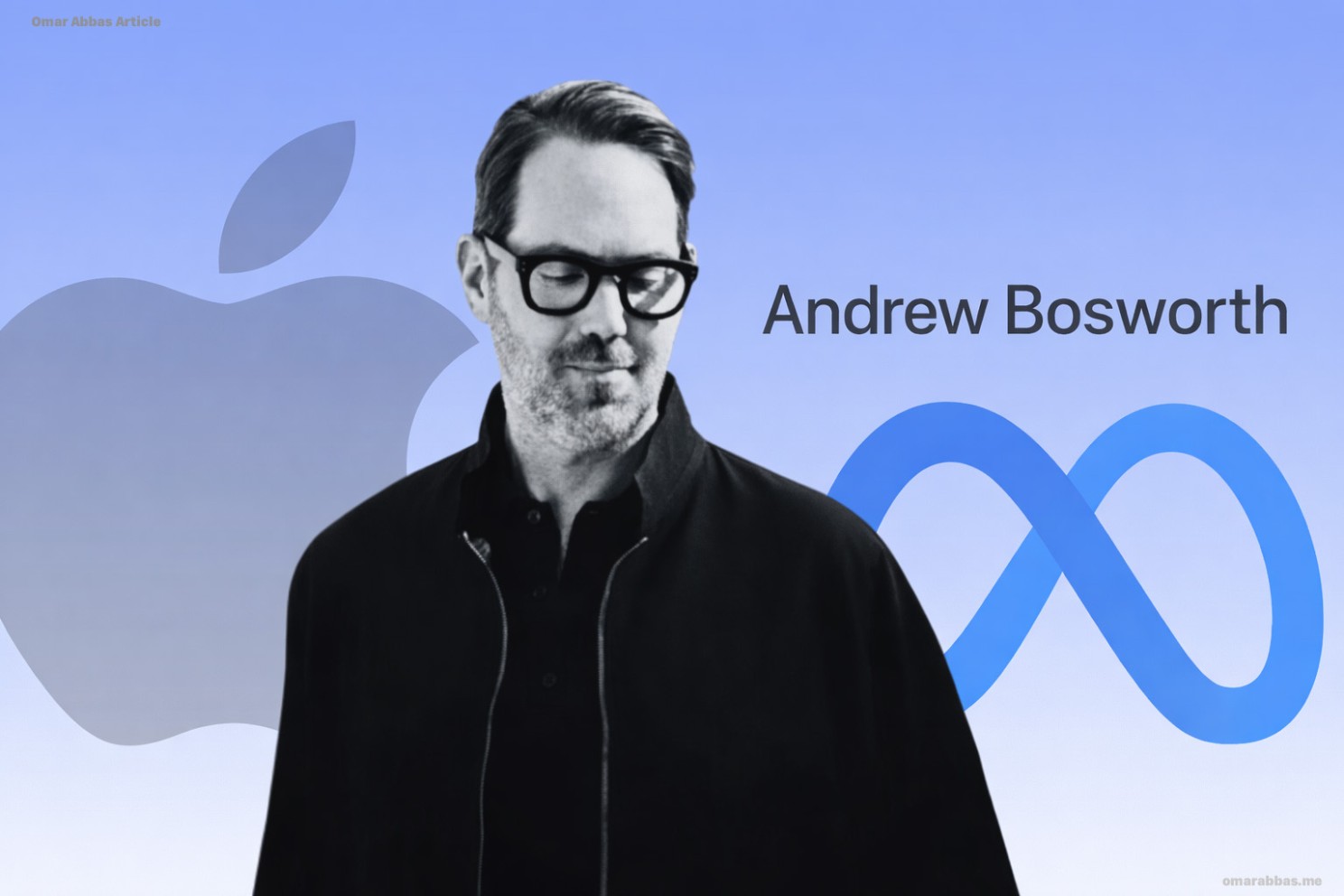
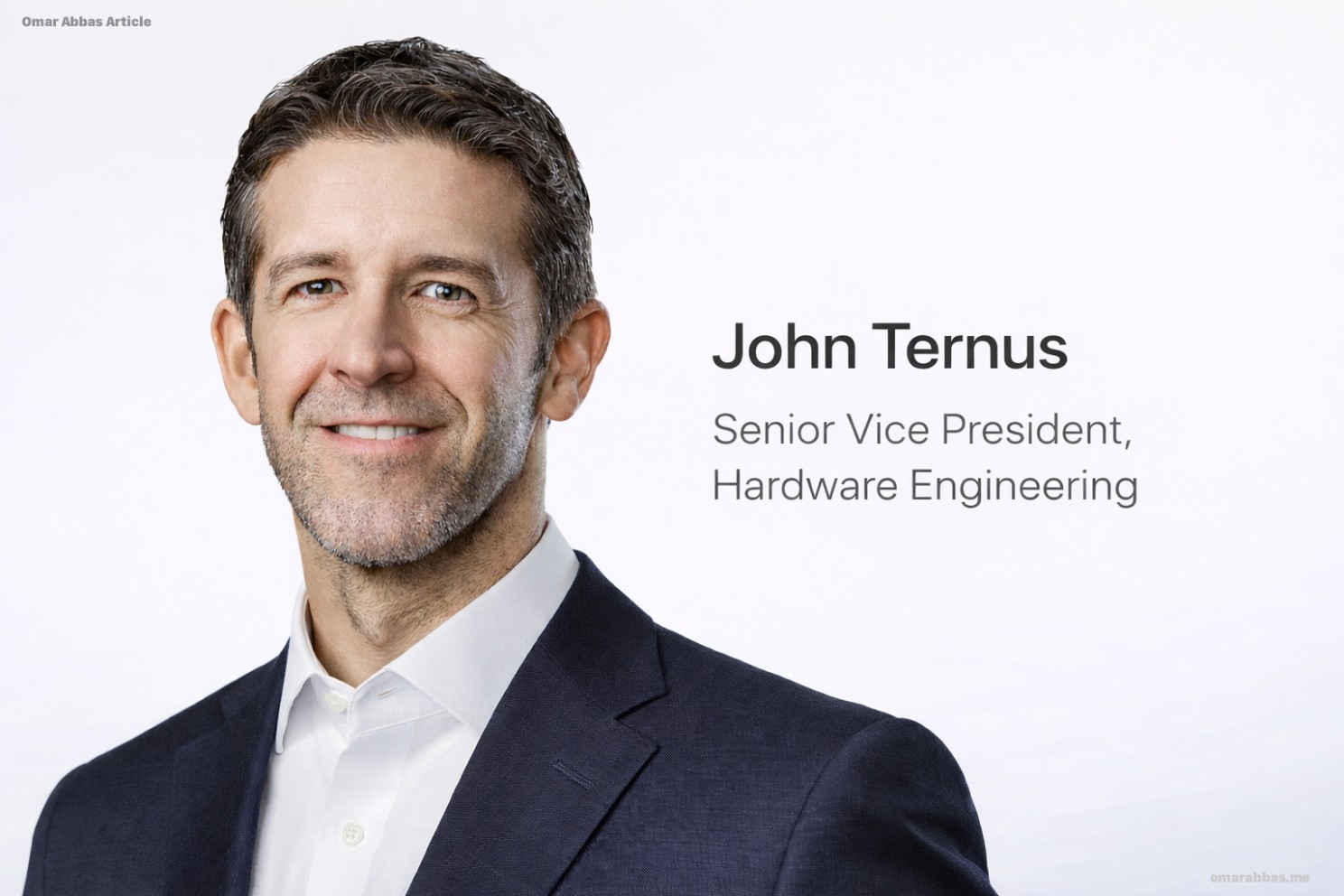
Reuters reported Alan Dye will join Meta as Chief Design Officer on December 31, 2025.
Veteran Apple designer Stephen Lemay will replace him.
Why it matters
Design leadership changes can reshape product experience slowly, not instantly. The signal here is continuity inside Apple (replacement from within) plus pressure from external talent competition.
December 4, 2025: Legal, government affairs, and environment transitions
Apple announced a structured set of moves:
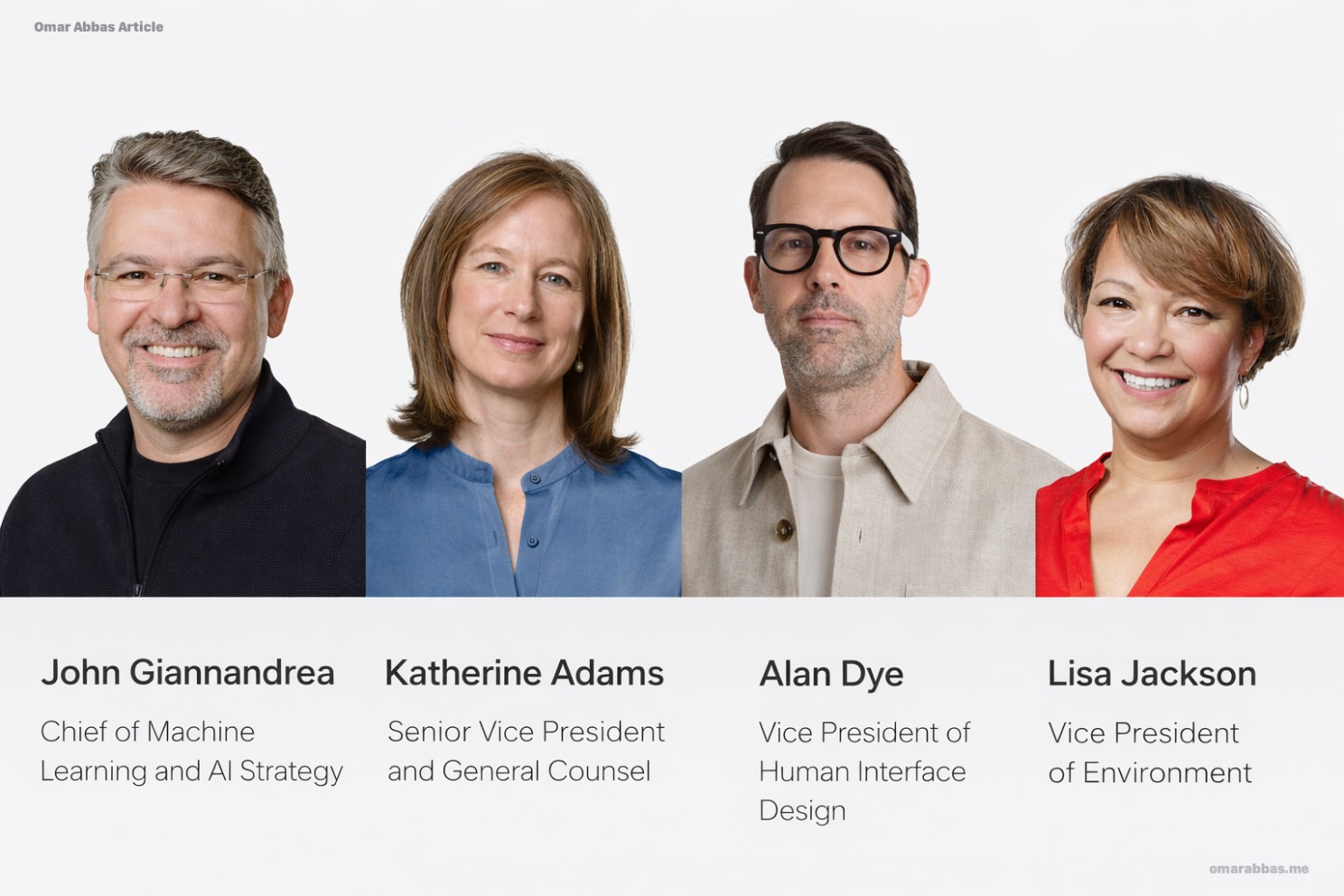
Jennifer Newstead will join Apple in January 2026 and become General Counsel on March 1, 2026.
Kate Adams will oversee Government Affairs after Lisa Jackson retires, then retire “late next year” (late 2026).
Lisa Jackson will retire in late January 2026.
Apple will combine Legal + Government Affairs under Newstead after Adams retires.
Environment and Social Initiatives will report to COO Sabih Khan.
Why it matters
This is staged. Apple avoided a single shock date. It also reduced leadership seams by combining related functions and moving sustainability execution closer to operations.
Why this looks like choreography, not collapse
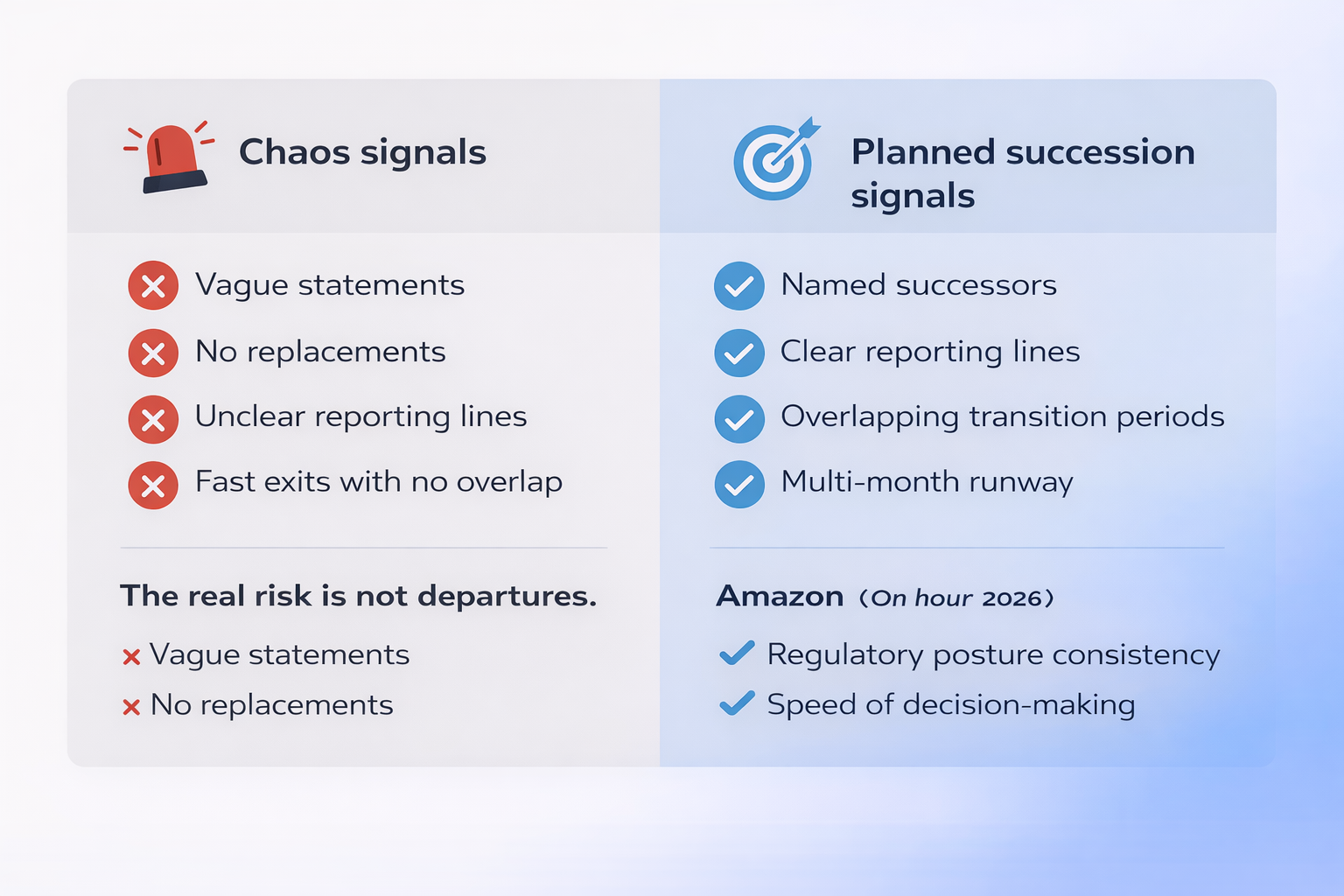
If Apple were reacting to chaos, you would expect:
vague statements
no replacements
unclear reporting lines
fast exits with no overlap
Apple did the opposite. It announced:
named successors
clear reporting lines
overlapping transition periods
a multi-month runway
That is what “planned succession” looks like in public companies.
The real risk is not departures. It’s unmanaged departures.
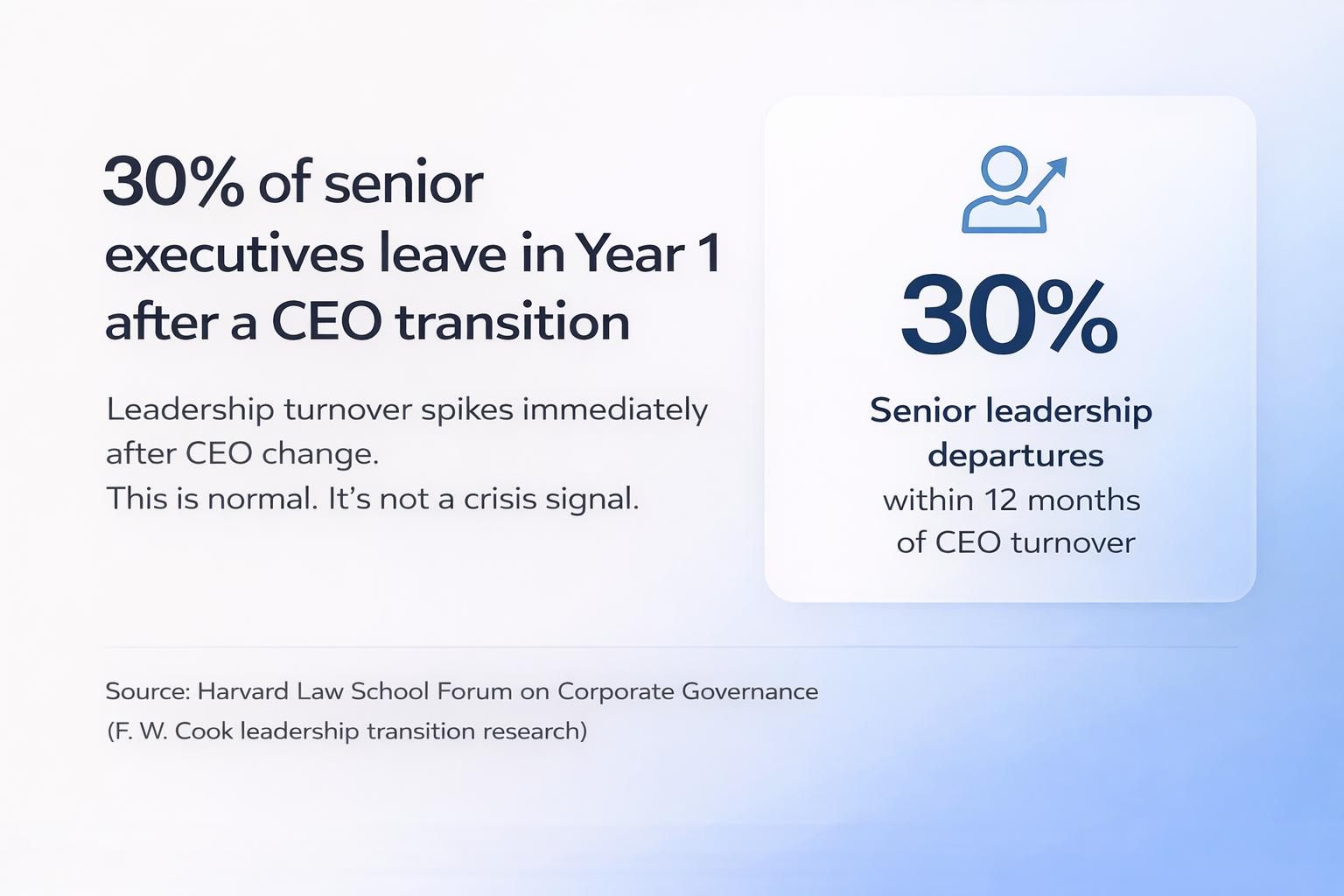
Leadership change increases senior churn. That is normal.
FW Cook’s research, posted via Harvard Law School’s corporate governance forum, found the most common departure point for senior leaders is the first year after CEO turnover (30%).
So the strategic question is not “Who is leaving?”
It’s this:
Are departures timed and replaced in a way that protects execution?
Are reporting lines simplified before the next phase?
Does the company protect its delivery cadence through the transition window?
Apple’s announcements look designed to reduce that first-year instability risk.
Case studies: what good and bad transitions teach us
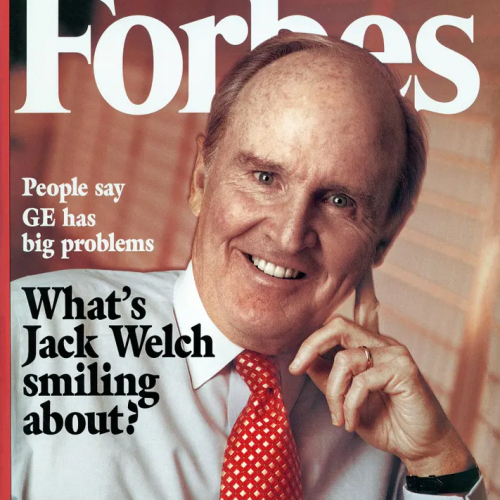
GE: a public succession race creates public losers
GE’s board picked Jeff Immelt to succeed Jack Welch in 2000 after a three-way internal race.
Fortune’s reporting from that period describes how visible the process became inside and outside the company.
Lesson
When succession becomes a public contest, you raise the odds that high performers exit quickly.
Amazon: reduce drama by letting exits happen before the handoff
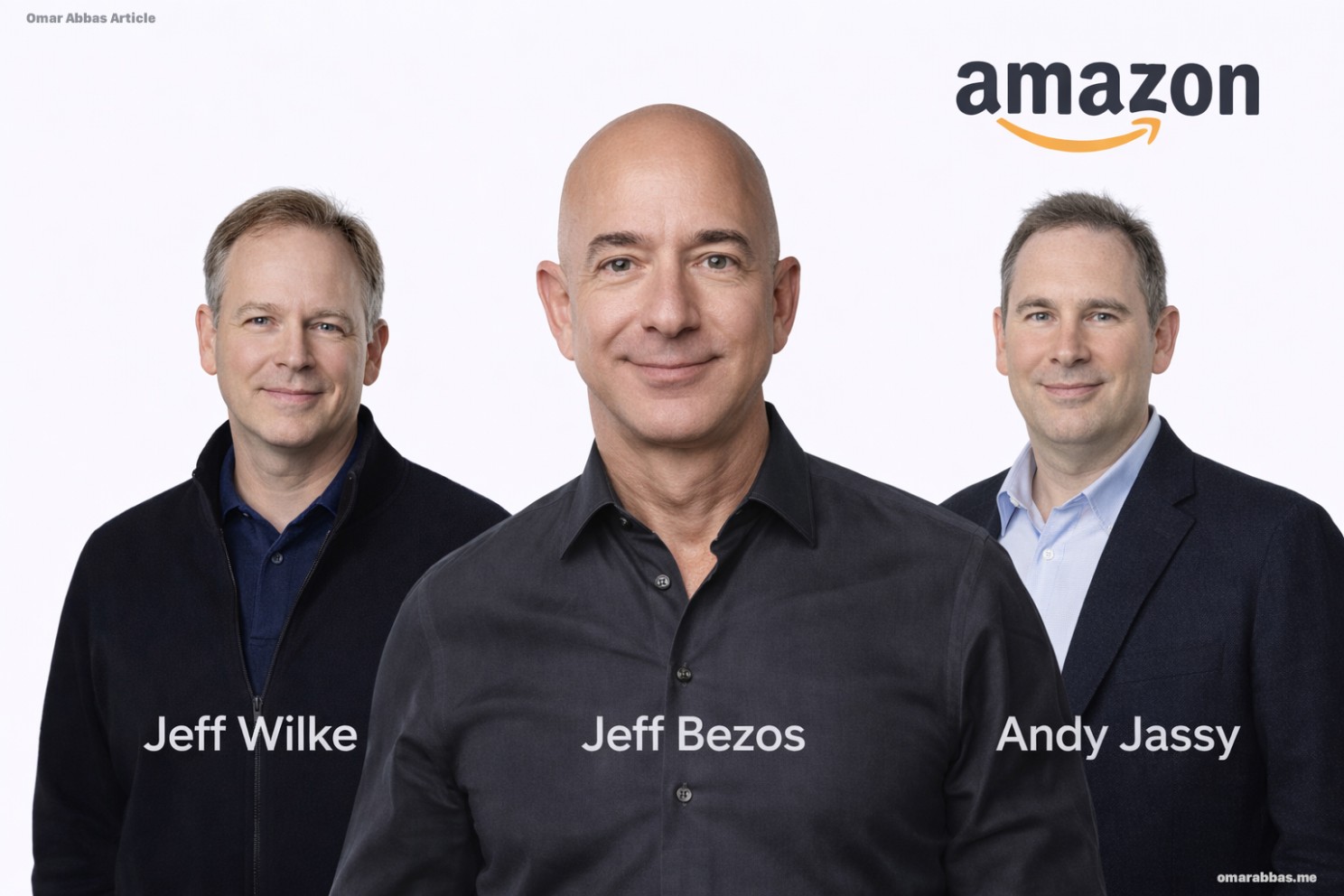
Amazon announced Jeff Wilke’s retirement (“Hanging up the flannel”) before Bezos later handed CEO to Andy Jassy.
Lesson
A clean exit for senior leaders can lower internal politics and protect momentum.
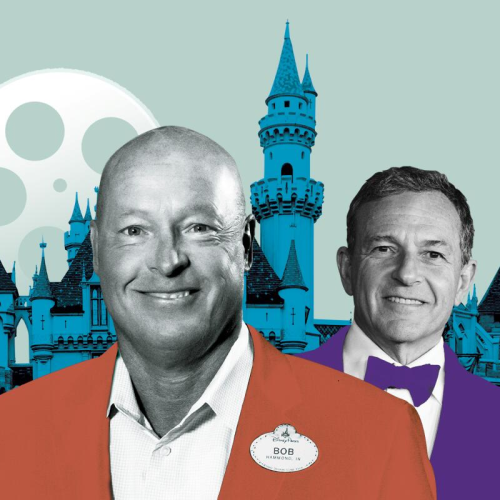
Disney: the outgoing CEO staying “close” can weaken the new CEO
CNBC reported that executives who lost power under Disney’s restructure complained to Iger, and Iger told them he did not agree with the reorg, while Chapek heard it indirectly.
Lesson
If leaders treat the former CEO as a second decision center, the new CEO loses authority fast.
What to watch at Apple in 2026
1) AI delivery pressure
Reuters and others reported the leadership change followed criticism and delays around Apple’s AI efforts and Siri upgrades.
What I would watch
shipping cadence, not keynote promises
where AI teams sit in the org chart
whether Apple reduces cross-team dependencies for AI features
2) The legal + government consolidation
This is a direct response to overlap between legal work and government work. Apple said so in its announcement.
What I would watch
regulatory posture consistency
speed of decision-making on policy issues
ability to keep privacy narratives stable during leadership change
3) Design leadership continuity
Apple replaced Dye with a long-time internal leader while Meta hired Dye as part of its push into AI consumer devices.
What I would watch
whether Apple’s interface direction becomes more consistent release to release
whether Meta’s “design + AI devices” bet speeds up its consumer hardware ambition
The business lesson: brand trust is built during transitions
Customers do not track org charts.
They track outcomes:
product quality
delivery consistency
message clarity
The strongest brands treat leadership transitions as a brand moment:
they reduce uncertainty
they protect execution
they avoid mixed signals
That is what Apple’s staged announcements aim to do.
If you lead a brand, copy this transition playbook
Use this as a checklist when your company faces leadership churn.
Announce early enough to reduce rumor fuel
Name replacements and give real dates
Keep overlap periods, not cliff-edge exits
Simplify reporting lines before the transition peaks
Move execution-critical teams closer to the core product org
Protect the narrative: what stays the same, what changes, and why
Set one internal comms version and repeat it until it sticks

FAQs (Fast)
Is Apple facing unusual executive turnover in 2026?
Apple announced several high-profile changes in a short window, but the structure, dates, and named successors signal planned transition management, not uncontrolled exits.
Who is replacing Kate Adams as Apple’s General Counsel?
Apple announced Jennifer Newstead will become General Counsel on March 1, 2026.
When is Lisa Jackson retiring from Apple?
Apple said Lisa Jackson will retire in late January 2026.
Who leads Apple’s AI after John Giannandrea steps down?
Reuters reported Amar Subramanya will take over as VP of AI and report to Craig Federighi.
Why did Apple move AI under Craig Federighi?
Apple did not publish a long explanation, but the reporting line change typically signals a push to tighten execution and speed product delivery inside software. The move was reported alongside concerns about delays.
Why did Alan Dye leave Apple for Meta?
Reuters reported Meta hired Dye as it accelerates work on AI-powered consumer devices, with Dye joining as Chief Design Officer.
What is the biggest risk in CEO transitions?
The first year is the peak churn period for senior leaders. Research shared via Harvard’s corporate governance forum found the most common departure point is year one (30%).