Key takeaways
— 72% of B2B deals in Saudi Arabia are won through referrals, introductions, or strategic partnerships — not cold outreach.
— Saudi sales cycles run 12–18 months versus 3–6 in the UK, and decision-making happens at C-suite or ministry level.
— Local partners, bilingual branding, and ESG alignment with Vision 2030 separate winning bids from stalled ones.
Saudi Arabia's Vision 2030 unlocked a $3.2 trillion project pipeline — from NEOM and the Red Sea Project to infrastructure and a global positioning as a technology and innovation leader. UK businesses have a golden opportunity to engage with a growing Gulf landscape.
In contrast to UK's data-driven, transactional sales environment, 63% of B2B deals in Saudi Arabia are built on long-term relationships, trust, and face-to-face engagement. Without a deep understanding of these cultural and strategic nuances, even the most well-resourced companies lose out to less-resourced competitors.
This playbook — curated by Omar Abbas, a solid-gold B2B marketing consultant specialising in cross-border Saudi deal success — reveals the winning strategies, tailored insights, and case studies behind cross-border deal success. Whether you're in fintech, logistics, tech, or construction, this guide will help you close high-value contracts across the Kingdom. For a bilingual identity built with this same market in mind, see the Ayama case study.
UK vs. Saudi B2B: key cultural differences every sales leader must know
While UK firms often thrive on data, speed, and digital norms, Saudi Arabia's business culture is rooted in trust, seniority, and human connection. Understanding this contrast is not just a cultural curiosity — it's essential to closing high-value contracts. For more on this gap, see Bridging Cultures: UK vs. Saudi Arabia Brand Strategy.
Why it matters: 72% of B2B deals in Saudi Arabia are won through referrals, trusted introductions, or strategic networking — not cold outreach. One UK fintech company learned this the hard way, losing an £18M deal after months of emails, while a competitor that attended a Vision 2030 industry forum and built local ties closed the same tier of deal in under 14 days.
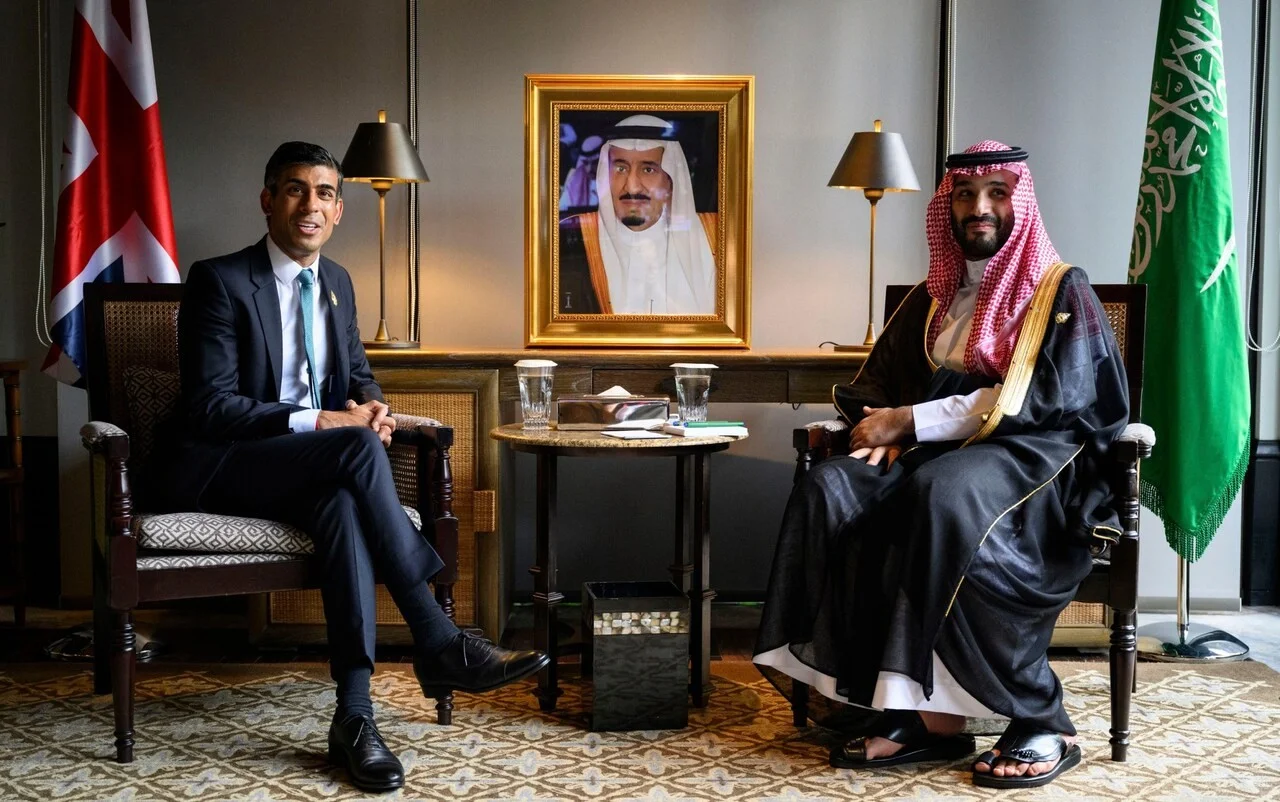
On the left, a UK official meeting with a Saudi leader in a formal setting. On the right, another UK delegation extends protocol — highlighting the importance of trust-building and protocol in Saudi B2B business culture.
Wasta > cold emails: how referrals drive 72% of Saudi B2B deals
In Saudi Arabia, business relationships are built on trust, reputation, and credibility — not cold pitches. This is where the concept of "wasta" (وسطة) comes in, similar to trusted introductions in the West, but far more central to closing deals — particularly in construction, tech, and logistics.
Cold outreach struggles here: according to Gulf Business and MAGNITT, 72% of B2B contracts in Saudi Arabia are won through referrals, introductions, or strategic partnerships — not cold outreach. Meanwhile, emails and LinkedIn messages continue to underperform outside of warm relationships.
Case example: a UK fintech startup lost a £20M deal after 6 months of outreach. Meanwhile, a competitor who invested in networking via the Future Investment Initiative closed the same client within two months — by being introduced through a mutual investor, not cold emails.
What works? building your network at industry-relevant forums like LEAP, FII, and GITEX. Collaborate with local accelerators or business councils, and always lead with local value, not volume.
Meetings, contracts & ESG: navigating Saudi Arabia's new B2B landscape
Succeeding in Saudi Arabia isn't just about the offer you make — it's how you approach the deal, from entering the Kingdom with intent to a business environment shaped by tradition, regulation, and rapid modernisation. Here's what to expect at every stage.
1. Business meetings: executive-only access
Over 60% of major Saudi deals require C-suite or ministry-level approval. Meetings are typically formal, beginning with Arabic greetings such as "As-salamu alaykum." Relationship-building outside the boardroom drives outcomes — dinners, conferences, or Majlis gatherings.
Example: a UK logistics firm secured a $300M infrastructure deal only after six months of building rapport with local officials through consistent in-person engagement.
2. Contracts: regulatory compliance & local partners
Aligning with local regulations is critical. Working directly with the Ministry of Investment (MISA) streamlines licensing and approvals. More importantly, partnering with a local entity can reduce your time-to-market by over 60%.
Tip: data entry often takes 15–45 months. With a local partner, it can be as fast as 3 months.
3. Negotiation: sell value, not price
Pricing matters — but strategic alignment matters more. Saudi buyers prioritise legacy, impact, and alignment with Vision 2030. Position your offer as a long-term solution that supports national priorities.
Case study: a UK logistics firm won a service model to align with green goals in the logistics sector — and won a $80M contract.
5 critical mistakes UK firms make in Saudi Arabia — and how to avoid them
Even experienced UK brands stumble in the Saudi market if they apply a Western playbook to an Eastern context. From underestimating the importance of bilingual branding to misjudging engagement pacing, these are the most common — and costly — errors.
Saudi B2B buyers are strategic, not transactional. They're investing in partners who understand regional goals, not just short-term deliverables. Avoiding these mistakes can be the difference between a stalled deal and a multi-million pound contract.
Proven UK-Saudi deals: case studies from NEOM, fintech, and logistics
When UK businesses align with Saudi Arabia's national vision and understand regional expectations, the results reveal how localisation, partnership, and long-term strategy unlock cross-border, multi-million pound success.
UK construction firm — $500M NEOM smart city contract
Challenge: initial design model didn't comply with NEOM's evolving Vision Program.
Solution: partnered with the NEOM smart infrastructure program.
Result: secured a $500M contract to support NEOM's Vision 2030 goals.
UK fintech company — $20M market expansion
Challenge: cold outreach failed to generate investor interest.
Solution: engaged with the Saudi Fintech Hub and joined Vision 2030 collaboration events.
Result: raised $20M in funding and signed government partnerships within 12 months.
UK logistics firm — $80M sustainability deal
Challenge: initial pitch focused on price-driven offering.
Solution: reframed offering to support Saudi green logistics goals.
Result: secured a recurring $80M contract as part of an ESG-aligned deal on 2030 logistics goals.
Why 2025 is the moment for UK firms to act in Saudi Arabia
Saudi Arabia's economy is no longer defined by oil — it's a $1 trillion-plus powerhouse that's actively investing in global partnerships, sustainability, and digital transformation. For UK firms, this is a rare window to build partnerships and value while shaping the region's future.
But only those who understand the cultural nuances, prioritise long-term relationships, and adapt strategic entry pathways — Vision 2030 isn't just a slogan — it's a high-speed transformation, and those who move early will lead the way.
FAQs (fast)
Why do referrals matter more than cold outreach in Saudi Arabia?
+
Saudi business culture runs on trust and reputation. 72% of B2B deals close through referrals, introductions, or strategic partnerships — cold emails and LinkedIn messages underperform outside warm relationships.
How long does a typical UK-Saudi B2B deal take?
+
Expect 12–18 months versus the UK’s typical 3–6 month cycle. Major deals often require C-suite or ministry-level approval, which lengthens the timeline but builds a far more durable partnership.
Does ESG alignment actually affect deal outcomes?
+
Yes. Saudi buyers prioritise legacy and alignment with Vision 2030 over price alone — positioning your offer as a long-term, sustainability-aligned solution consistently outperforms price-led pitches.