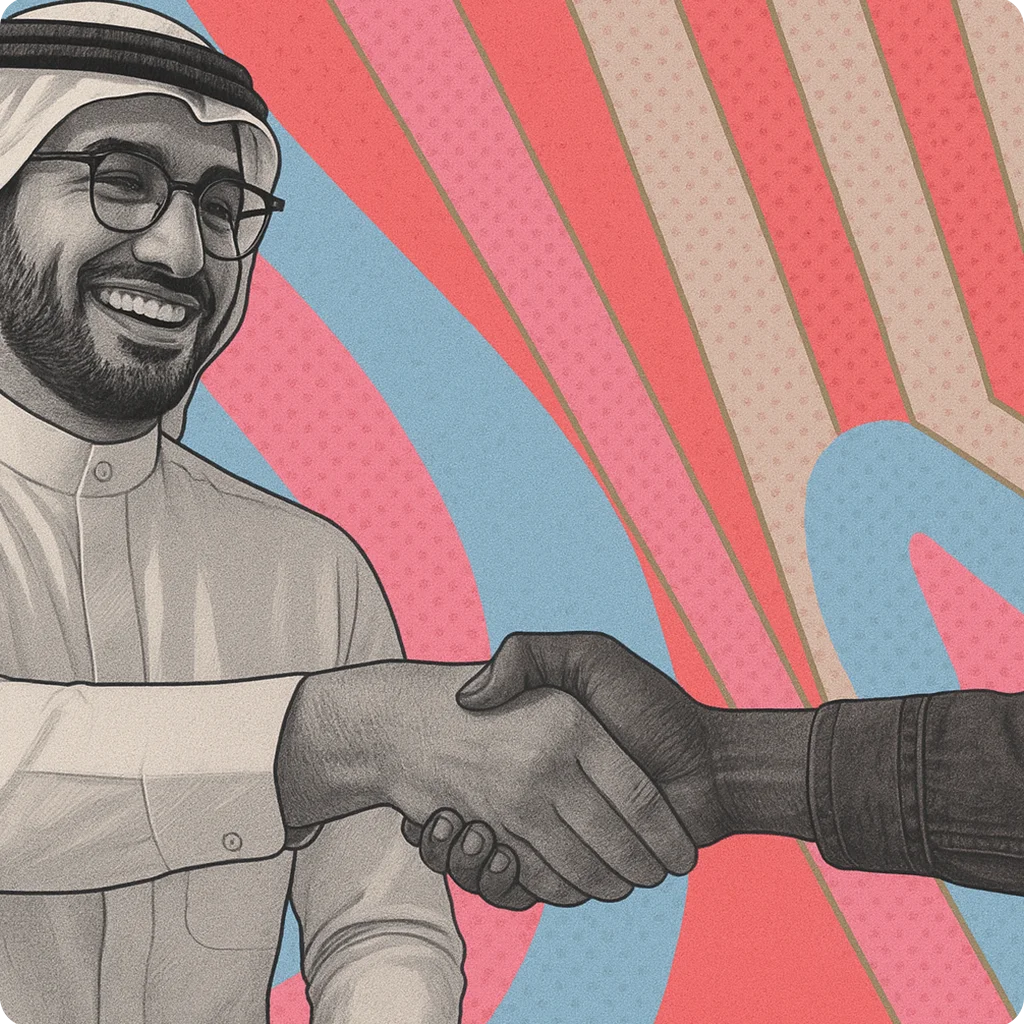
Expand between London & Riyadh with clarity, confidence, and local insight
Discover the 7 key differences shaping brand growth in the UK and Saudi Arabia — and how to bridge them with a practical playbook.
Omar Abbas·September 1, 2025·9 min read
Key takeaways
— Saudi Arabia has 99% internet penetration and a mobile-first, wallet-first buying habit. Copy-pasting a UK playbook won't work.
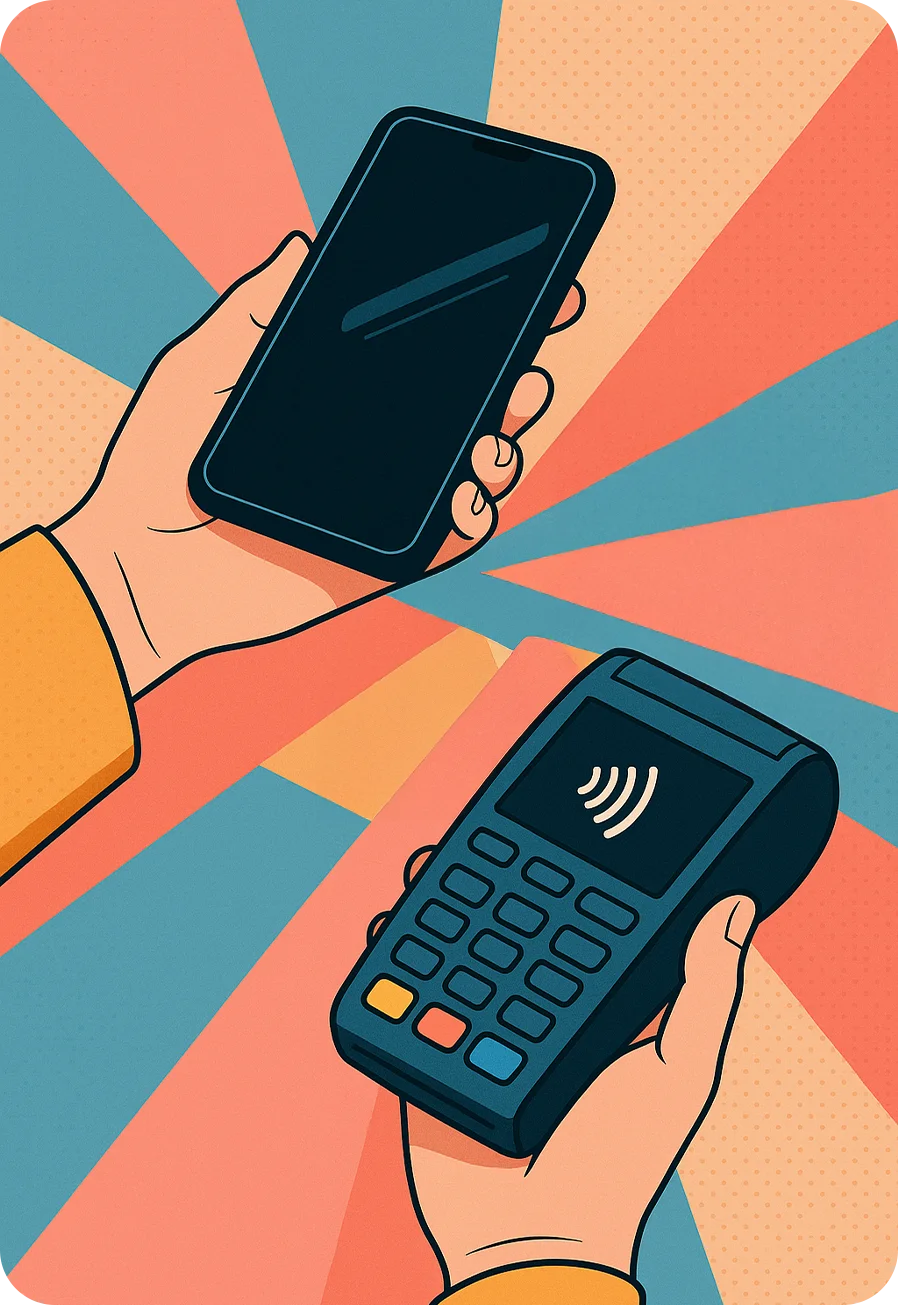
— 79% of Saudi retail transactions run through e-wallets and instant rails — checkout design has to follow local payment behaviour, not UK defaults.
— The fix isn't translation. It's one master positioning, localised into a UK plain-English variant and a KSA Arabic-first variant.
Where brand strategy meets culture
Expanding between London and Riyadh demands more than translation — it requires cultural fluency. Copy-pasting a UK playbook simply won't work. Saudi Arabia is now one of the most digital-first markets in the world, with 99% internet penetration and mobile-led habits that shape discovery and checkout. At the same time, 79% of retail transactions are e-wallet payments (Saudi Central Bank), making wallets and instant rails the norm.
My advantages
Cultural fluency
In Saudi Arabia, Arabic-first messaging with respectful tone and community values builds resonance. In the UK, buyers expect clear, proof-led communication with transparent pricing and compliance details.
Trust & proof
Saudi audiences look for local partners, Arabic CX, and seamless wallet options to confirm credibility. UK audiences rely more on independent reviews, accessibility standards, and visible data transparency.
Platforms & reach
TikTok, Snapchat, and creator-led content dominate social discovery in Saudi, with YouTube extending longer brand stories. In the UK, LinkedIn anchors B2B strategy while Reddit and TikTok grow as trusted research hubs.
Checkout & compliance
Saudi buyers expect wallet-first checkout (mada, Apple Pay, stc pay) and PDPL-compliant data handling. UK buyers prioritise BNPL clarity (Klarna, PayPal), VAT/returns transparency, and GDPR compliance.
Market differences (2025)
Four places the two markets pull apart hardest — and where localisation has to be deliberate, not decorative.
Checkout & payments
Saudi mada, Apple Pay, wallets (COD optional). UK Cards, Klarna/BNPL, VAT transparency, frictionless guest checkout.
Language & trust signals
KSA Arabic-first, local partners, e-wallets. UK plain English, reviews, accessibility, GDPR compliance.
Digital & social behaviour
Saudi audiences buy directly from TikTok, Snapchat, and creators — fast checkout is the norm. UK buyers compare across reviews, LinkedIn, and publishers before acting.
Seasonality & culture
Saudi calendars revolve around Ramadan/Eid (4 campaign phases). UK focuses on Black Friday, fiscal year, and industry events.
The bridge playbook (UK ↔ Saudi, 2025)
Expanding between London and Riyadh isn't about alignment — here's how to adapt your brand strategy across both markets. This mirrors the localisation lessons in our UK–Saudi B2B playbook.
Unified positioning, localised messaging
Start with one master positioning, then build a UK plain-English variant and a KSA Arabic-first variant. Keep headlines benefit-led and proof-backed, and carry the same core promise across both markets to protect brand consistency.
United Kingdom: proof-led content & GDPR-ready
In the UK, lead with clarity and credibility: plain English, concrete numbers, and accessible pages. Build demand on LinkedIn and YouTube, then capture it on Google Search with non-brand queries and strong internal linking to Services. Make consent and claims airtight — GDPR/PECR compliance, accurate sustainability statements, and a cookie banner with real choices.
Checkout, compliance & KPIs: local UX, shared analytics
Remove checkout friction in both markets, but optimise locally. UK users expect one-tap wallets (Apple/Google Pay), short forms, and clear returns. KSA users expect mada/Apple Pay surfaced early, fewer fields, and WhatsApp/live chat for reassurance. Map data flows and notices for PDPL (KSA) vs GDPR (UK), split ad accounts/budgets, and track one KPI spine: reach engaged views product page visits checkout starts purchases — then iterate monthly.
Quick templates you can copy
Sometimes strategy feels abstract — here are ready-to-use templates you can adapt straight into your campaigns.
Audience one-liner
"We help [ICP] in [UK/KSA city] achieve [core outcome] with [point of difference], delivered in [EN/AR] with [local trust signal]." Example: "We help retailers in Riyadh scale e-commerce sales with AI-driven campaigns, delivered in Arabic with seamless mada wallet checkout."
Case study frame
1. Brief — what was the challenge 2. What we did — your solution in simple terms 3. Results (numbers) — metrics that prove impact 4. Local proof — partner logo, testimonial, or regional credibility 5. What's next — show momentum
30-day cadence — Saudi Arabia
4 short native videos (Arabic captions) · 2 creator collaborations · 2 product reels with wallet call-to-action · 1 YouTube mini-case study · 1 Ramadan/Eid-timed value post
Mini-proof from portfolio
Real-world examples make the difference. Here are two cases that show how cross-market strategies work in practice.
Led a global rebrand that merged London design sensibility with Middle Eastern heritage.
Created a sustainable brand identity that resonates in both the UK and Saudi markets. Proof that a "localised global" approach builds trust across regions.
Directed high-stakes, cross-border media production for BMW's hydrogen program.
Coordinated shoots between Dubai and Oman, aligning with regional partners. Delivered compelling content that positioned BMW as a leader in sustainable mobility.
FAQs (fast)
Do I need Arabic content for Saudi Arabia?+
Yes. Start small with Arabic captions and product pages. As demand grows, expand to full EN/AR parity — this directly impacts reach and trust.
Is UK compliance (GDPR) enough for Saudi Arabia?+
No. Saudi Arabia runs on its own data protection law (PDPL). Map data flows and consent notices separately for each market — don't assume GDPR coverage carries over.
What's the #1 mistake brands make?+
Copy-pasting one playbook across both markets. Translation is not localisation — payment methods, trust signals, and platform behaviour differ enough that each market needs its own variant.
Join the insider list for marketing trends & brand insights.