
Levi's Covered Its Own Logo at the World Cup. It Became the Most Talked-About Brand of the Tournament.
When FIFA forced Levi’s to hide its logo, the brand didn’t fight it. It leaned in — and got more attention than the sponsors who paid hundreds of millions to be seen.
Here’s what happened, why it worked, and what it tells you about how strong brands are actually built.
What actually happened
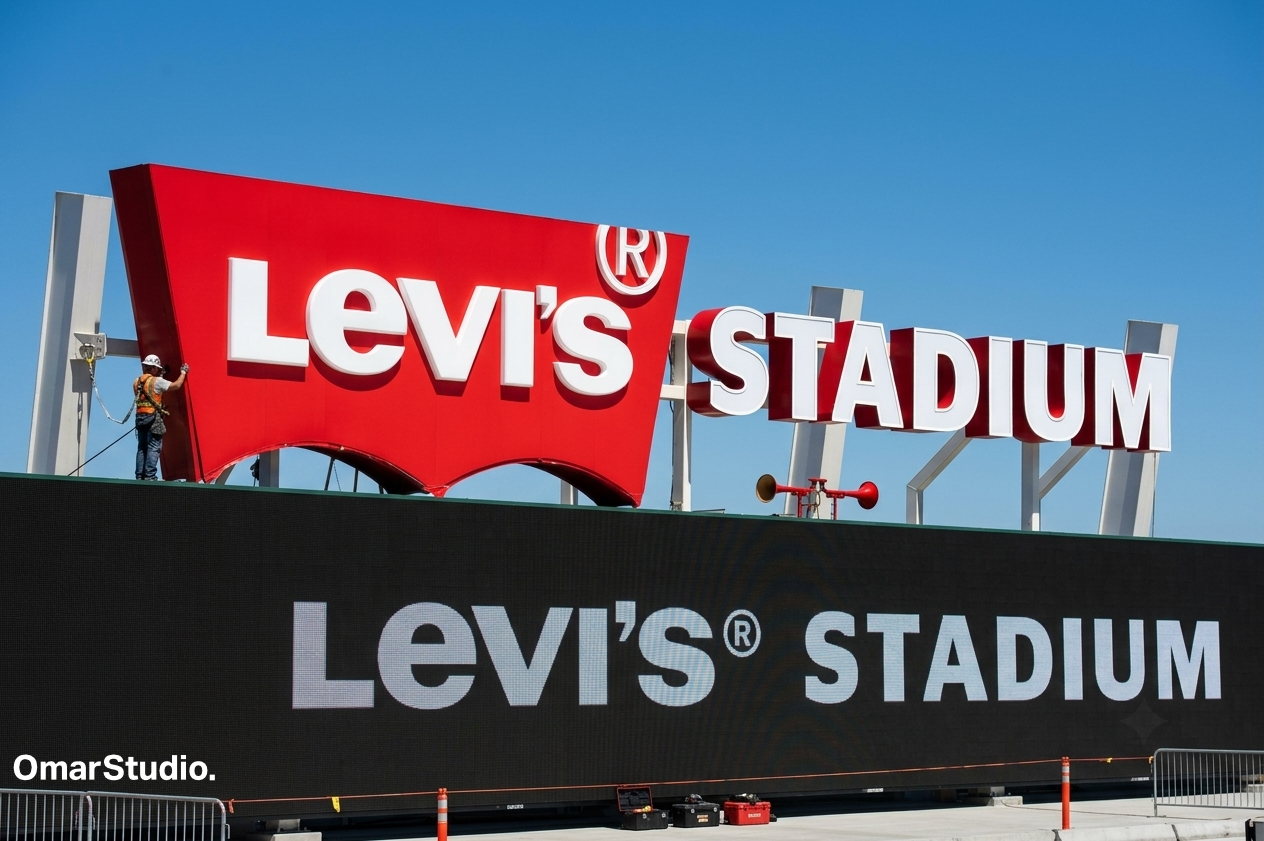
Levi’s Stadium in Santa Clara is hosting matches at the 2026 World Cup, starting with Qatar against Switzerland on 13 June. But for the tournament, it isn’t called Levi’s Stadium. It’s “San Francisco Bay Area Stadium.”
The reason is a FIFA rule. Any brand that isn’t an official tournament sponsor has to be covered or removed inside host venues. Levi’s isn’t a FIFA sponsor, so the giant batwing logo on the stadium had to go.
Levi’s covered it with a tight white tarp. And that’s where it got interesting. The name disappeared. The shape didn’t. The tarp wrapped so closely around the sign that the outline of the batwing logo stayed completely recognizable. Fans knew exactly what was underneath.
Eleven other NFL stadiums had to cover their branding too. Most did the obvious thing — MetLife Stadium just hung plain banners over its name. Levi’s did the opposite. By wrapping the logo instead of blanking it out, they turned a restriction into the best free advertising of the tournament.
What is FIFA's "clean stadium" rule?
It’s a policy that keeps host venues clear of any branding that isn’t an official sponsor. FIFA does this to protect the partners who pay for exclusive visibility — companies that spend enormous sums to be the only brands seen during the tournament.
In practice, it means stadiums with corporate names get temporary, location-based names for the World Cup. Mercedes-Benz Stadium in Atlanta became “Atlanta Stadium.” Levi’s Stadium became “San Francisco Bay Area Stadium.” The rule reaches small details inside the venue too — branding gets covered almost everywhere a camera might catch it.
There’s one quirk worth knowing: Mercedes-Benz kept its logo on the stadium’s retractable roof. Some things are harder to cover than others.
Why hiding the logo made it more visible
Because Levi’s logo was never just the word “Levi’s.” It was the shape.
This is the part most brands will never experience. Levi’s has spent more than 150 years making one simple outline mean something. The batwing is so familiar that you don’t need to read it to recognize it. Cover the name, and the brand is still there.
Now run that same test on most companies. Take the name off their logo and what’s left? Usually nothing — a generic mark, or a wordmark that vanishes completely the moment you remove the letters. That’s the real story here, and it has nothing to do with football.
A logo you can recognize without the name is the finish line of brand identity. Almost nobody reaches it. Levi’s just proved, on the biggest stage in sport, that they have.
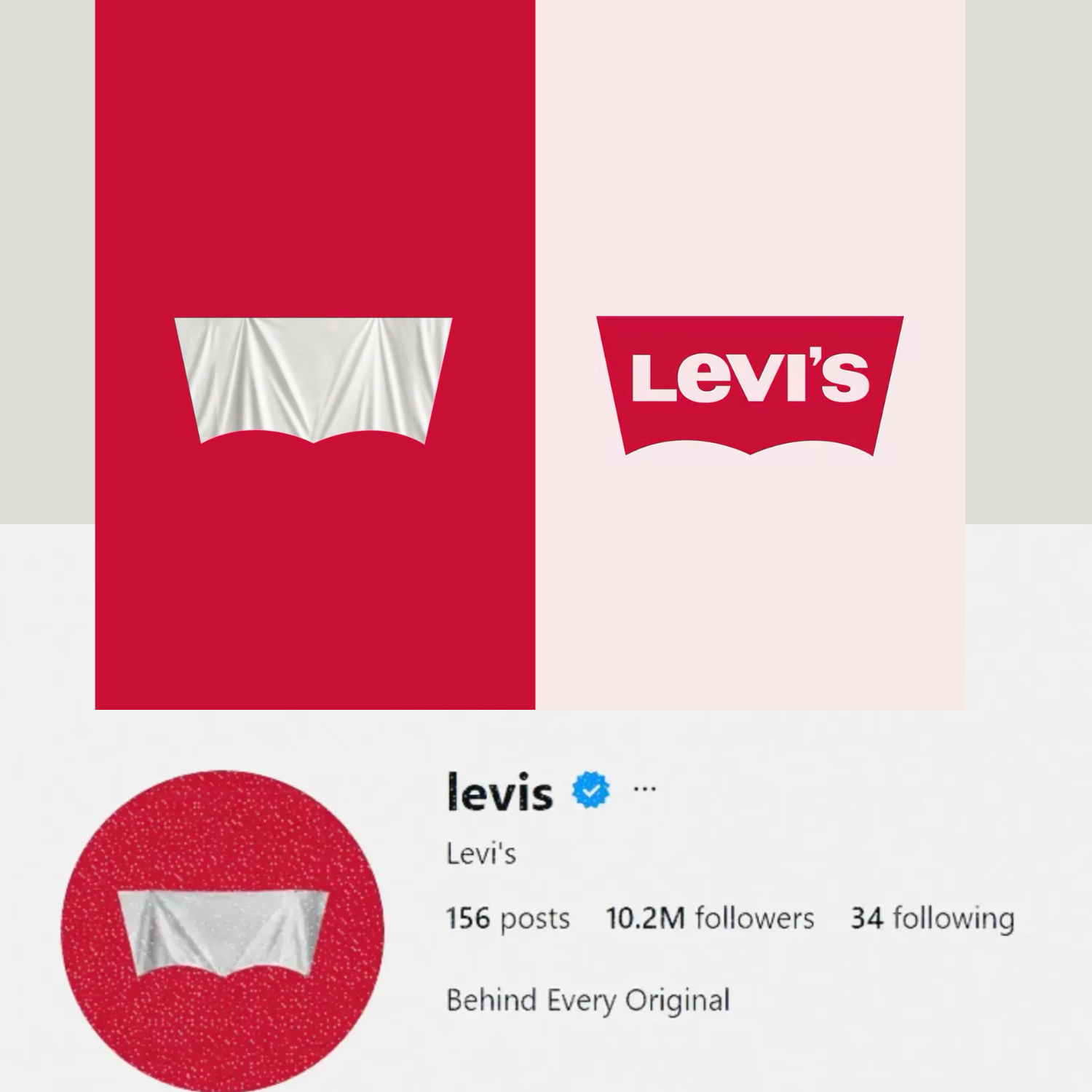
How Levi's responded
@levis come visit, if you can find us!
♬ original sound – originalsound26
Other brands joined the cover-up
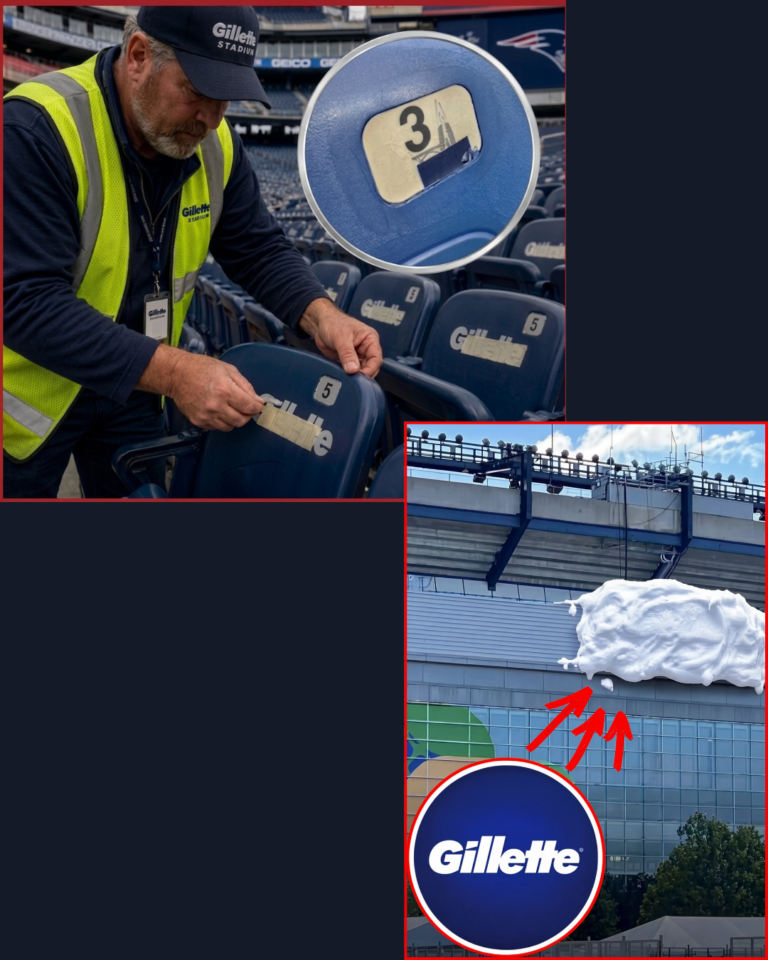
Levi’s wasn’t the only name FIFA came for. Gillette Stadium in Foxborough — home of the New England Patriots — became “Boston Stadium” for the tournament. FIFA’s rule didn’t stop at the building’s name. The Gillette logo is printed on every seat in the lower bowl, so crews went seat by seat, placing small pieces of blue tape over each one. All 64,146 of them.
That’s the clean-stadium policy with no sense of humour at all — and it’s the clearest sign that what happened with Levi’s wasn’t FIFA being lenient. It was Levi’s being smart about a rule that hit every non-sponsor exactly as hard.
And the look spread beyond stadiums. Levi’s own London store had the same white wrap over its storefront sign, posted by the brand’s own UK account — the joke wasn’t confined to California, it followed the brand home.
My read: was it really an accident?
The cover-up itself was forced. FIFA’s rule left Levi’s no choice there. But everything that came after looks less like luck to me.
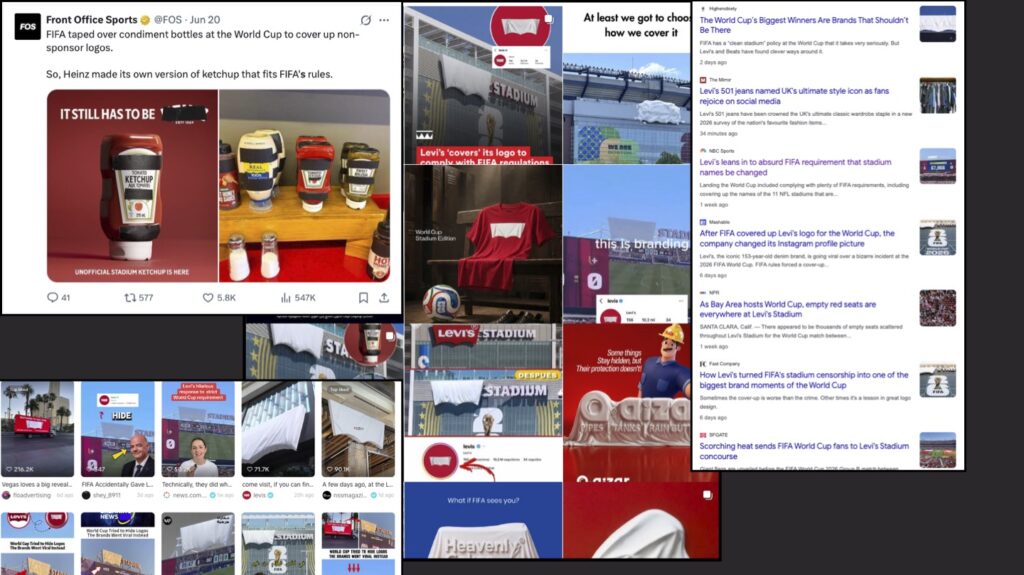
Here’s what I think actually happened. Levi’s didn’t just post once and hope. It pushed the moment through social and creators first — seeding the joke, letting influencers and marketing pages carry it, building the wave online before anything moved offline. Only once the conversation was already loud did the look spread to the shops and onto the street.
That order is the tell. Build the noise online, then take it to where people already are. That’s not a brand getting lucky with a tarp. That’s a brand that knew exactly how to feed a moment once it had one — and timed the physical rollout to land when attention was already at its peak.
Why this worked when it could have backfired
Speed and instinct. This wasn’t a campaign that sat in planning decks for months. The tarp went up, the team saw the opportunity, and they moved in under 48 hours.
That’s worth sitting with. We’re in an era where most brands use AI to fill the internet with safe, forgettable content. This was the opposite — a human, cultural, in-the-moment read that no content calendar would have produced. The win didn’t come from volume. It came from a team that understood its own brand well enough to play with it.
You can only be this loose with your identity when the identity is solid underneath. Levi’s could afford to censor itself because it knew the brand would survive being censored. Most brands can’t take that risk, because there’s nothing strong enough underneath to hold the joke up.
Why now? Why didn't this happen before?
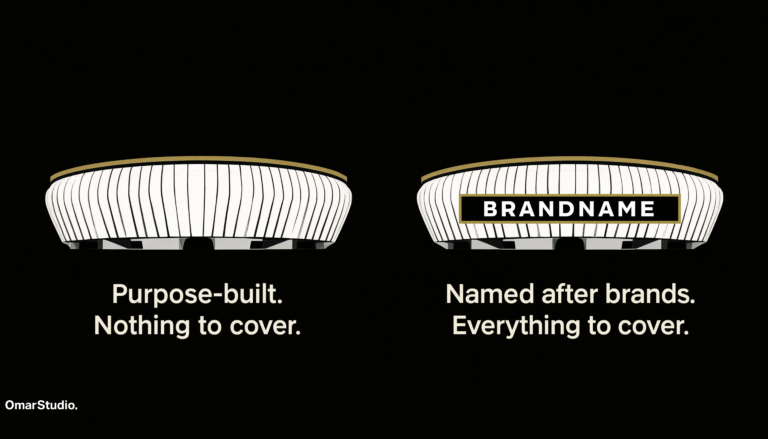
Simple. The last World Cup was in Qatar. Every stadium was purpose-built for the tournament — no NFL deals, no corporate naming rights, nothing to cover. FIFA’s clean-stadium rule existed, but there was nothing it needed to erase.
2026 is different. For the first time, FIFA is using existing American stadiums. Venues that were already named after brands long before a football was kicked there. Levi’s Stadium. Gillette Stadium. Mercedes-Benz Stadium. MetLife. NRG. All of them carry commercial names. All of them had to be stripped back.
That’s what created the wave. Levi’s didn’t manufacture the opportunity — FIFA handed it to every non-sponsor with a stadium name. The difference is what Levi’s did with it in the first 48 hours.
Add TikTok. Add a trending audio clip that already had 9 million ears. The moment was sitting there. Levi’s was just the one paying attention.
What you can actually take from it
You probably can’t engineer a viral World Cup moment. That’s not the lesson.
The lesson is what made it possible. Levi’s didn’t win because of a clever social post. It won because, long before any of this, it had built a brand strong enough that hiding the name changed nothing. The post was the easy part. The 150 years of work underneath it was not.
So ask the honest question about your own brand: if someone covered your name tomorrow, would anyone still know you? For most businesses the answer is no — and that’s the real gap to close. Not a louder logo. A brand that means something even when no one’s allowed to say its name.
That’s the work — building a brand with a real root in the market, not just a logo that looks good. If that’s where you are, let’s talk →